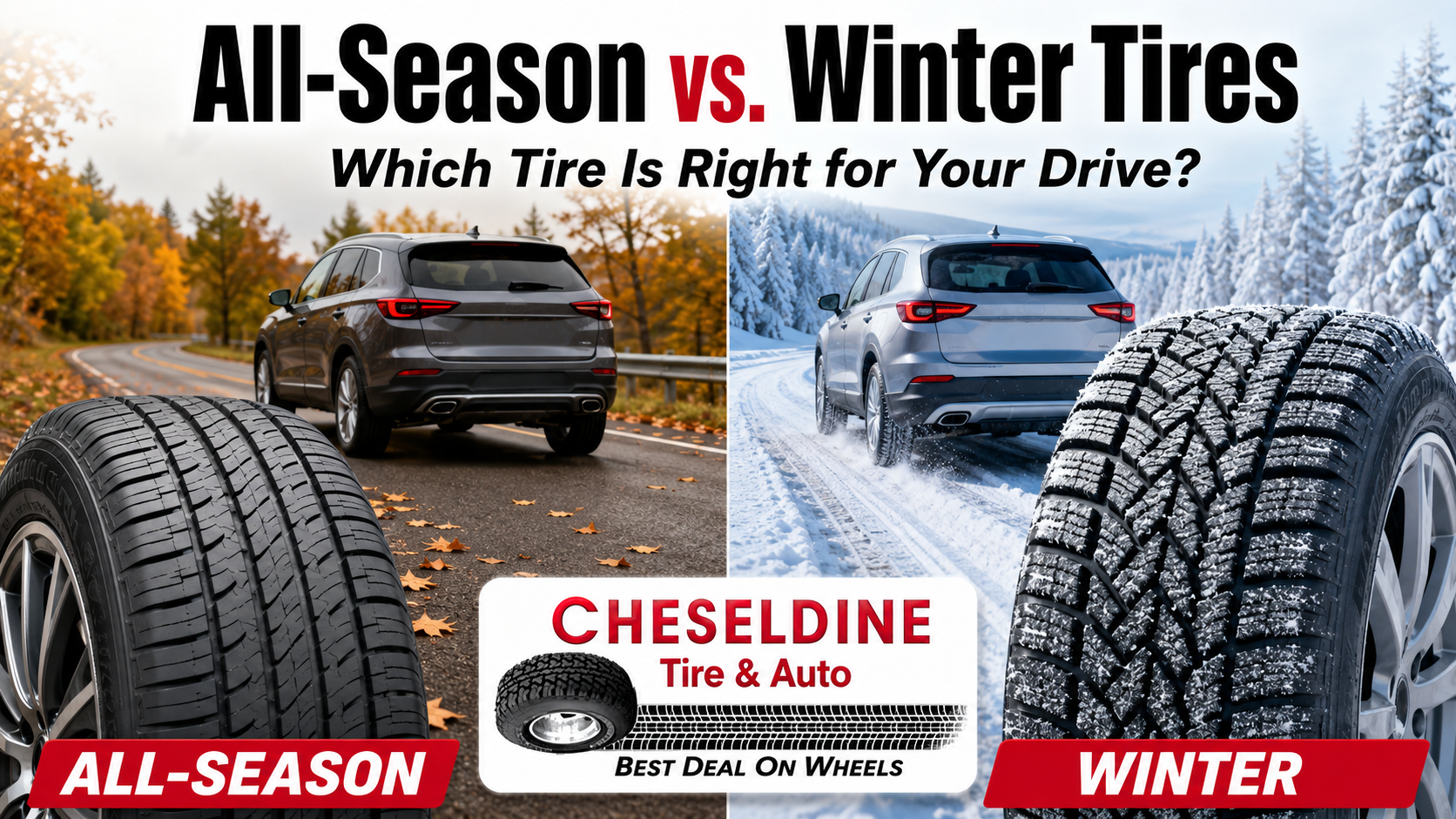
All-Season vs. Winter Tires
All-Season vs. Winter Tires: What's the Difference, and Do You Need Both?
When temperatures start to drop, one of the most common questions we hear at Cheseldine Tire and Auto is whether all-season tires are really "good enough" for winter, or if it's worth switching to a dedicated winter set. The honest answer depends on how and where you drive — but understanding the actual differences between the two can help you make the right call for your vehicle.
What All-Season Tires Are Built For
All-season tires are designed to be a practical, year-round compromise. They're built to handle a wide range of conditions — dry roads, light rain, and mild winter weather — without needing to be swapped out twice a year. The rubber compound is formulated to balance performance across a broad temperature range, and the tread pattern is designed for reasonably good grip in light snow and wet conditions.
For drivers in Southern Maryland who mostly deal with occasional light snow, rain, and moderate winter temperatures, all-season tires often provide enough traction to get through the season safely — especially if the tread is in good condition.
What Winter Tires Are Built For
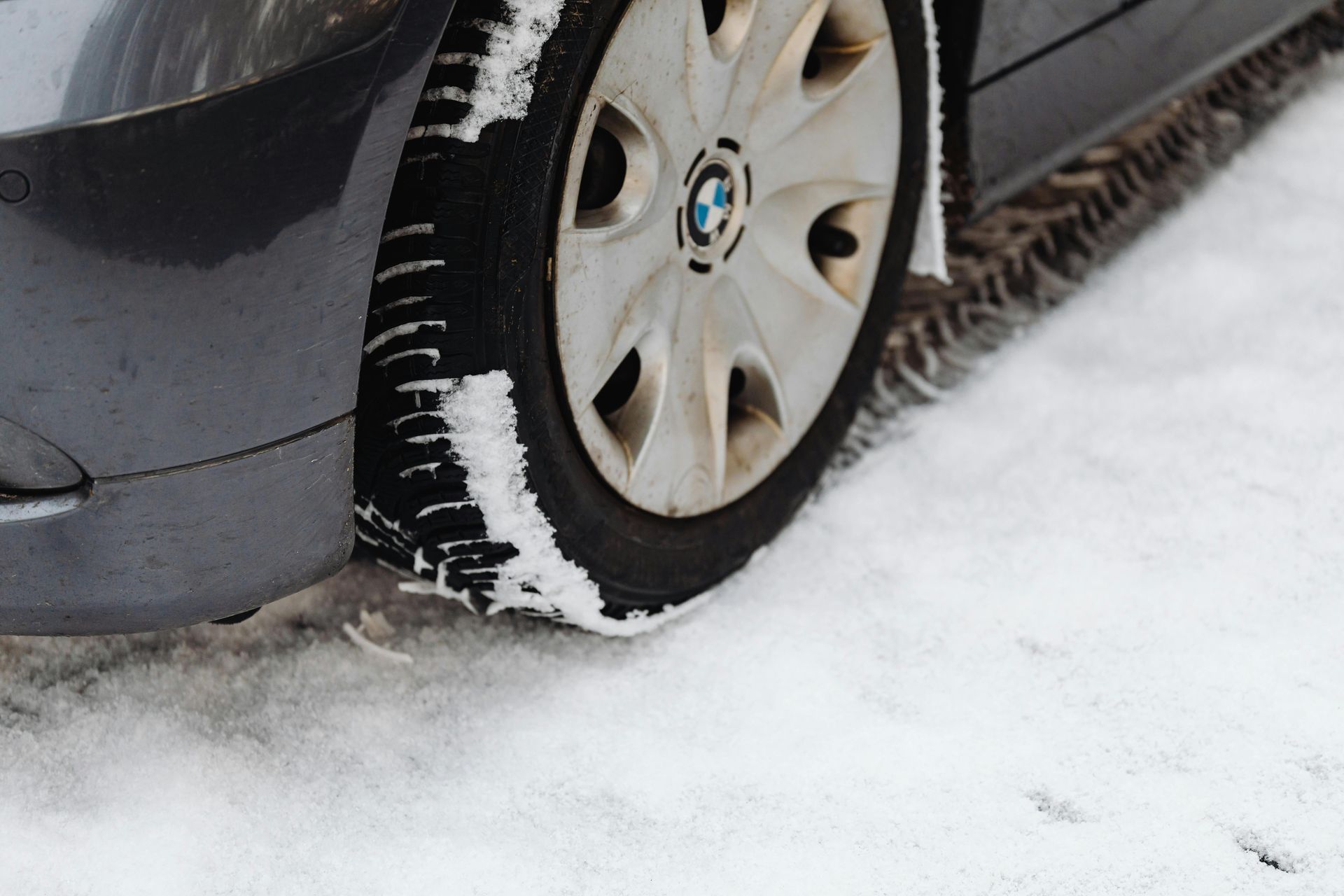
Winter tires are a different product entirely. They use a softer rubber compound specifically engineered to stay flexible in cold temperatures — below about 45°F, all-season and summer rubber compounds start to stiffen, which reduces grip even on dry pavement. Winter tires stay pliable in the cold, which means better contact with the road.
They also feature deeper tread patterns and unique tread designs with small slits called sipes, which bite into snow and ice for added traction. The combination of softer rubber and specialized tread makes a real difference in stopping distance and control on snow, ice, and slush.
The Key Differences at a Glance
- Rubber compound: Winter tires stay flexible in cold weather; all-season tires stiffen once temperatures drop.
- Tread design: Winter tires have deeper tread and more sipes for snow and ice traction; all-season tires have a shallower, more general-purpose tread.
- Performance range: All-season tires aim for balance across conditions; winter tires are optimized specifically for cold, snow, and ice.
- Wear: Winter tires used outside of winter wear down faster because the softer compound isn't built for warm-weather driving.
So, Do You Need Both?
It depends on your driving conditions and how much winter weather you typically see:
- If you mostly drive on cleared roads with occasional light snow, a good set of all-season tires with healthy tread is often sufficient.
- If you regularly drive in heavy snow, ice, or hilly and rural areas, or if you do a lot of early-morning or late-night winter driving, dedicated winter tires can make a meaningful difference in safety and control.
- If your current all-season tires are already worn down, that's a sign it may be time to consider a winter-specific set rather than pushing worn tread through the coldest months.
Many drivers who see significant winter weather choose to run winter tires from late fall through early spring, then switch back to all-seasons for the rest of the year. It's an extra step, but for the right driving conditions, it's one that pays off in traction and stopping power when it matters most.
Not Sure Which Option Is Right for You?
Every driver's situation is a little different, and the right tire choice depends on your vehicle, your typical routes, and how much winter weather you deal with. The team at Cheseldine Tire and Auto can take a look at your current tires, talk through your driving habits, and help you decide whether all-season or winter tires make the most sense for your Southern Maryland winter.